Books Everyone Should Read
This is my list of non-fiction books that I think everyone should read. The books are selected based on a combination of my favorite books and the best general interest books I have found on a particular topic that everyone should read about. There may be better books on any topic, but I haven't yet found them. There is a bit of a bias toward the first good book I read on a particular subject. I still need to add history, physical science, and ecology books.
See also, Books I've Read More Than Once.
This bibliography is available in BibTeX format.
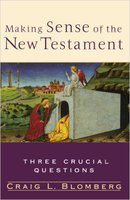
Making Sense of the New Testament
by Craig L Blomberg
This book has three parts:
-
How we know the NT is accurate
-
Yes, Paul’s teaching was consistent with Jesus’ teaching
-
Understanding the NT
The first section is an excellent introduction to the historicity of the Gospels. The third section is a good introduction to Christian thinking.
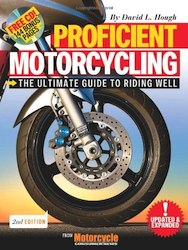
Proficient Motorcycling
by David L Hough
This is the book on safe motorcycle riding technique. If a complete understanding of the content of this book was a prerequisite for applying for a learners permit for a car, the roads would be much safer for everyone.
Read my review of the second edition.
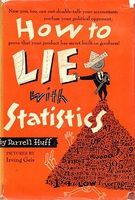
How to Lie with Statistics
by Darrel Huff
How to Lie with Statistics is a good introduction the level of statistics that is essential for everyday life. This short, clear book is well written, and has a wide enough audience that it has been in print since 1954. This basic knowledge of statistics is important enough that every high school student should be required to write a paper proving they understand How to Lie with Statistics in order to graduate. I believe that it is irresponsible to vote without grokking the material covered in this book.
I posted a one page summary of this book.
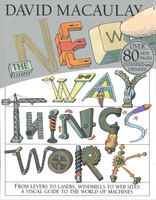
The Way Things Work
by David Macaulay
I’m always amazed at how little many people understand about the basic mechanical workings of things around them. This is a good introduction, It was written and drawn as a humorous book for kids, but there are many adults who could benefit from looking at it.
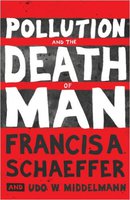
Pollution and the Death of Man
by Francis Schaeffer
This is Schaeffer’s short (125 pages, including appendices) argument that Christians should treat nature with respect. Schaeffer argues that Christians are the only people who have a reasonable moral background to be environmentalists, and that others have a basis of mere pragmatism. Unfortunately, many who claim to be Christians do not understand this, and instead of leading the green movement, are actively hostile to creation care.
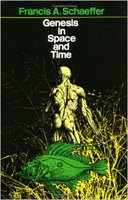
Genesis in Space and Time
by Francis Schaeffer
What the Bible says about creation isn’t what most people today think it says. A proper historical interpretation to Genesis is critical for the truth of Christianity, but many interpret Genesis in the concretist (which they call literalist or biblicist) view, which is mostly the result of 20^th^-century misunderstandings.
Essential Truths of the Christian Faith
by R C Sproul
A good summary of reformed Christian doctrine. Summary of Christian Doctrine by Louis Berkhof is also a good choice, but Sproul’s book is easier to read.
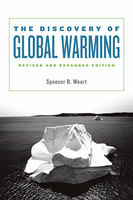
The Discovery of Global Warming
by Spencer R Weart
The Discovery of Global Warming is an excellent history of climate science. If more people understood the history of science, the misinformers wouldn’t be nearly so successful. You can read the latest version online.
Books [not quite] Everyone Should Read
This list is for books that didn't quite make the Everyone list, but I recommend frequently. This list is also available in BibTeX format.
- Summary of Christian Doctrine by Louis Berkhof
- Internal Combustion: How Corporations and Governments Addicted the World to Oil and Derailed the Alternatives by Edwin Black
- Shop Class as Soulcraft: An Inquiry Into the Value of Work by Matthew B. Crawford
- Changing Planet, Changing Health: How the Climate Crisis Threatens Our Health and What We Can Do about It by Paul Epstein and Dan Ferber; read my review
- A Gap in Nature: Discovering the World's Extinct Animals by Tim Flannery and Peter Schouten
- Calvin on the Christian Life: Glorifying and Enjoying God Forever by Michael Horton
- Merchants of Doubt: How a Handful of Scientists Obscured the Truth on Issues from Tobacco Smoke to Global Warming by Naomi Oreskes and Erik M Conway
- Winning our energy independence: an energy insider shows how by S. David Freeman; read my review
- Free lunch: how the wealthiest Americans enrich themselves at government expense (and stick you with the bill) by David Cay Johnston
- Natural Capitalism: Creating the Next Industrial Revolution by Amory Lovins
- Reading the Landscape of America by May Theilgaard Watts; read my review
The book covers are copyright by the various publishers or authors, or are in the public domain.